Not all AI agents are built the same. Some simply respond to prompts, while others plan, collaborate, and operate autonomously. Understanding the difference is the first step toward building real agentic systems.
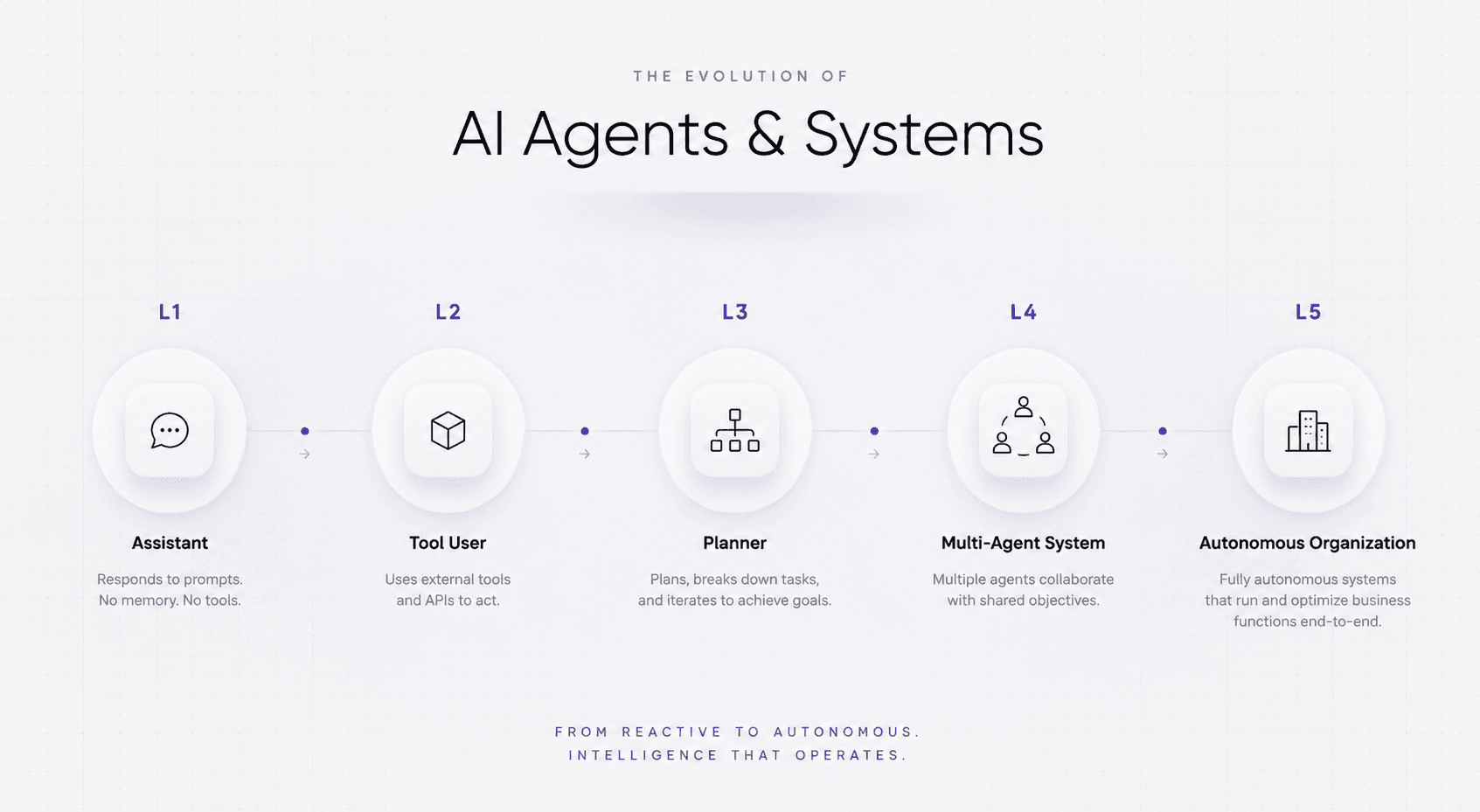
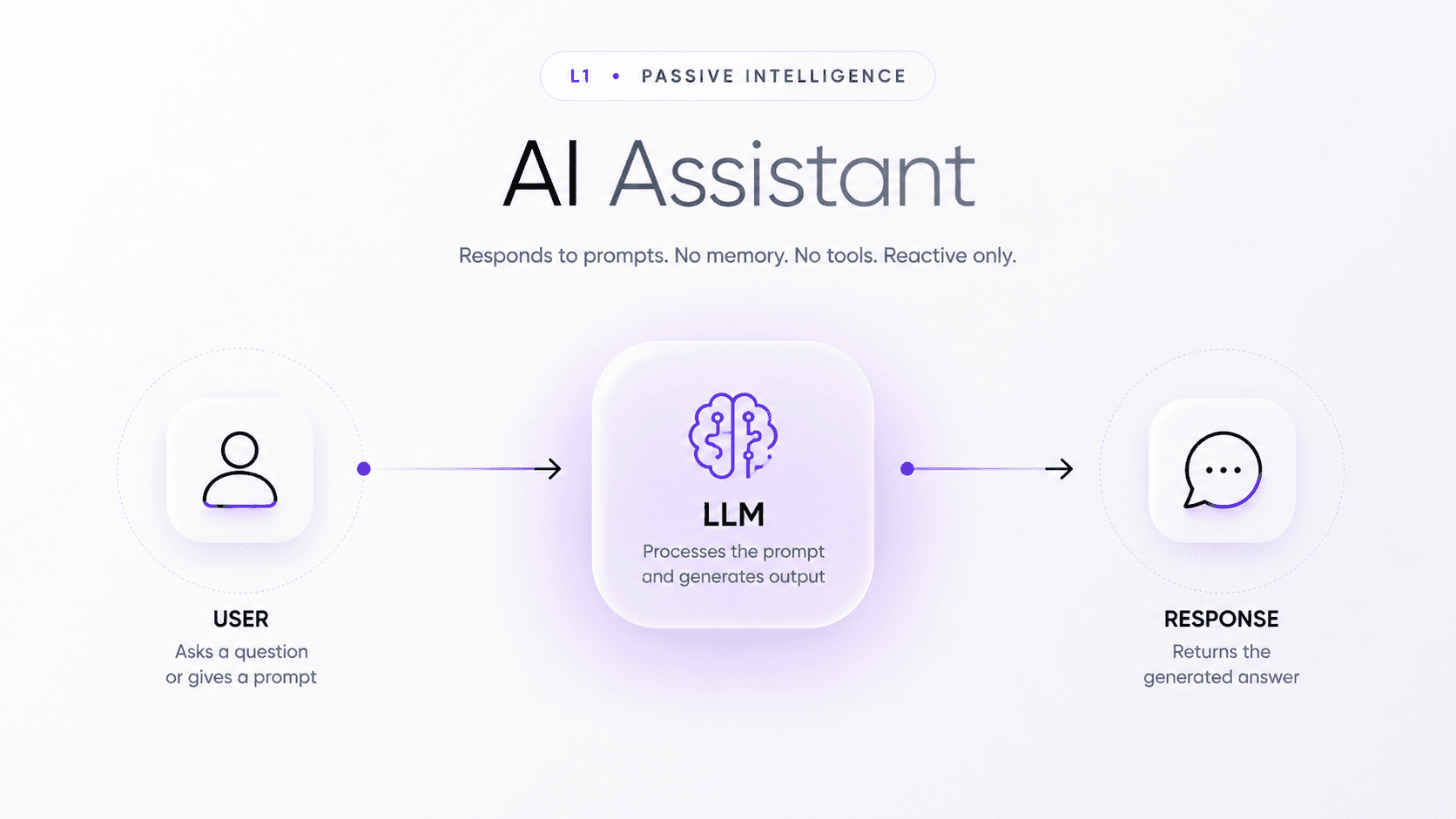
The most basic form of agentic intelligence — reactive, prompt-driven, and limited to generating responses.
L1 systems are what most people interact with today when they use AI. A user provides a prompt, the language model processes it, and a response is returned.
There is no persistent memory, no planning loop, and no access to external tools. The system cannot independently take actions beyond generating text or media.
Common examples include basic chat interfaces like ChatGPT in simple chat mode, FAQ bots, and customer support assistants.
Core Characteristics
• No memory
• No planning
• No tools
• Reactive only
Limitation: It can think within a prompt, but it cannot act.
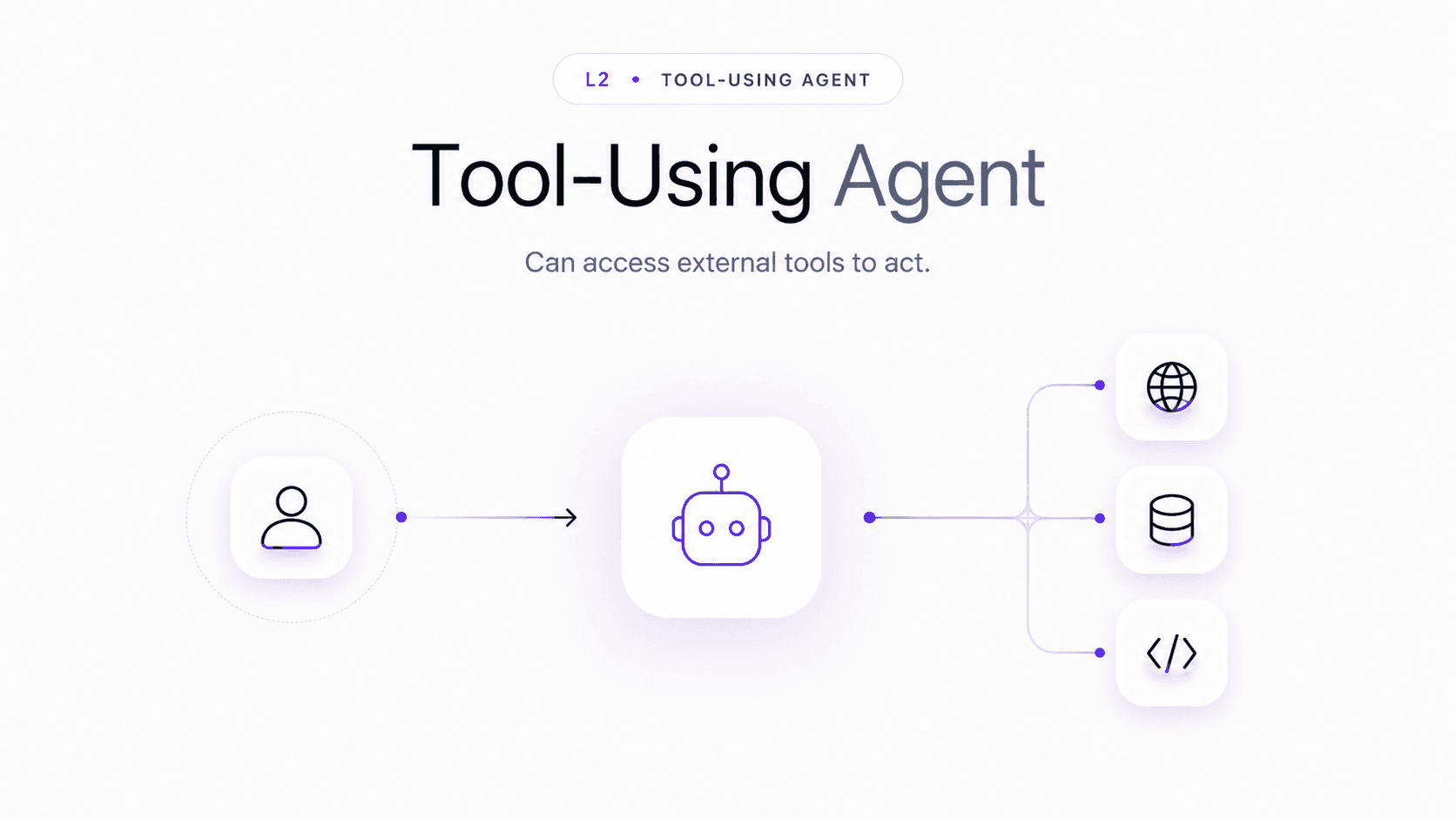
The first meaningful jump in capability — AI that can access external systems and perform actions beyond conversation.
At Level 2, the system is no longer restricted to generating responses from its internal knowledge alone. It gains access to tools, APIs, databases, and external services.
Instead of merely answering a question, the agent can retrieve live information, update records, send emails, or trigger workflows inside business systems.
Common examples include CRM updaters, automated email senders, database search agents, and API-connected assistants.
Core Capabilities
• Reads external data
• Uses tools & APIs
• Takes actions
• Executes workflows
Key shift: AI stops being informative and becomes operational.
This is where AI starts behaving less like software and more like an intelligent decision-making system.
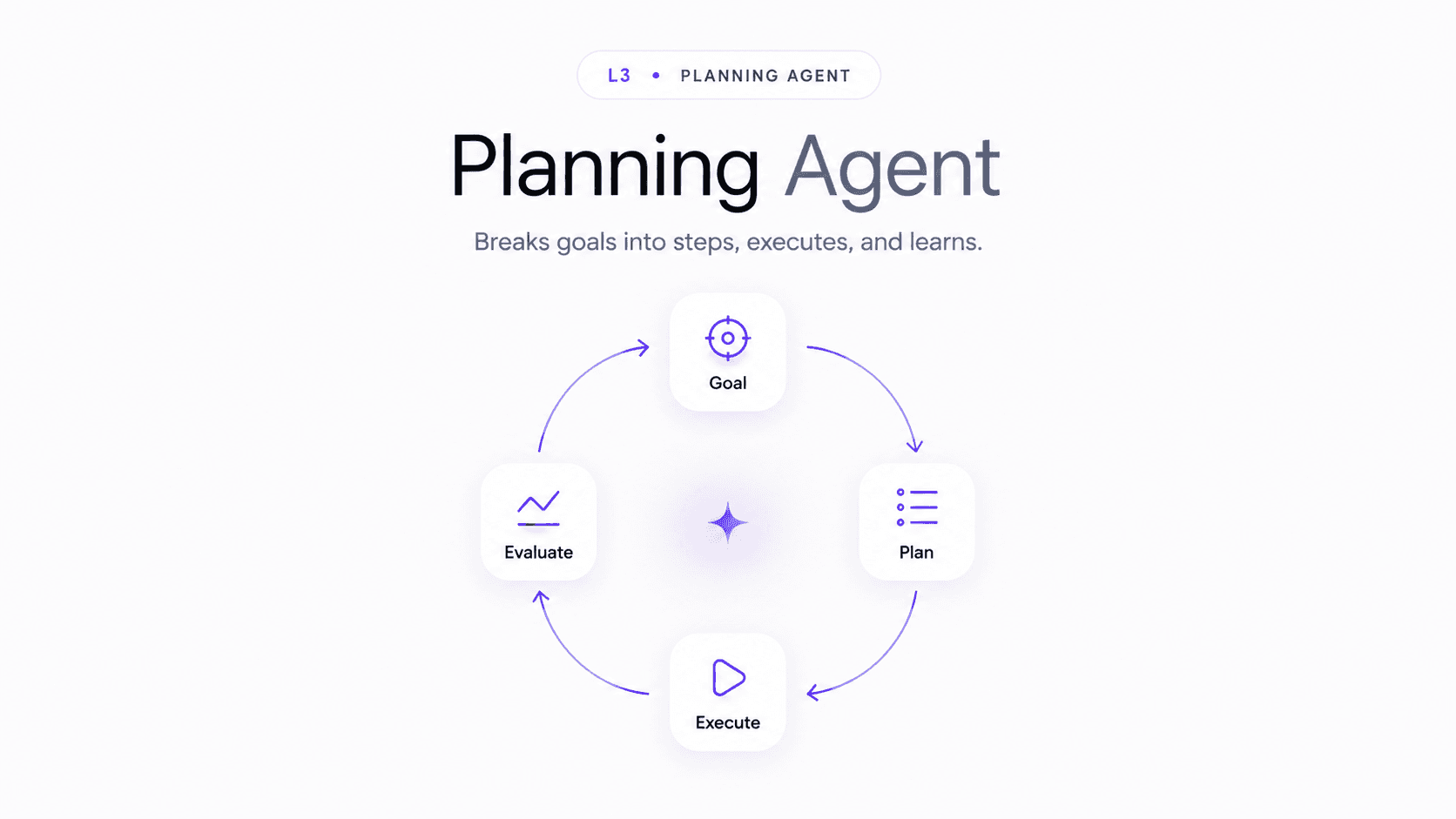
Level 3 is where true agentic behavior begins. Instead of directly reacting to a prompt, the system can reason about a goal and break it into smaller actionable steps.
Rather than asking for each individual action, you can provide a high-level objective and allow the agent to determine the optimal path toward completion.
Imagine asking an AI system to generate leads for fintech founders. A planning agent would not simply respond with text — it would think through the workflow required to complete the task.
Example Workflow
• Search relevant sources
• Filter qualified prospects
• Enrich contact data
• Send targeted outreach
Core Capabilities
• Planning
• Task decomposition
• Memory
• Iteration
Key shift: AI begins to reason before acting.
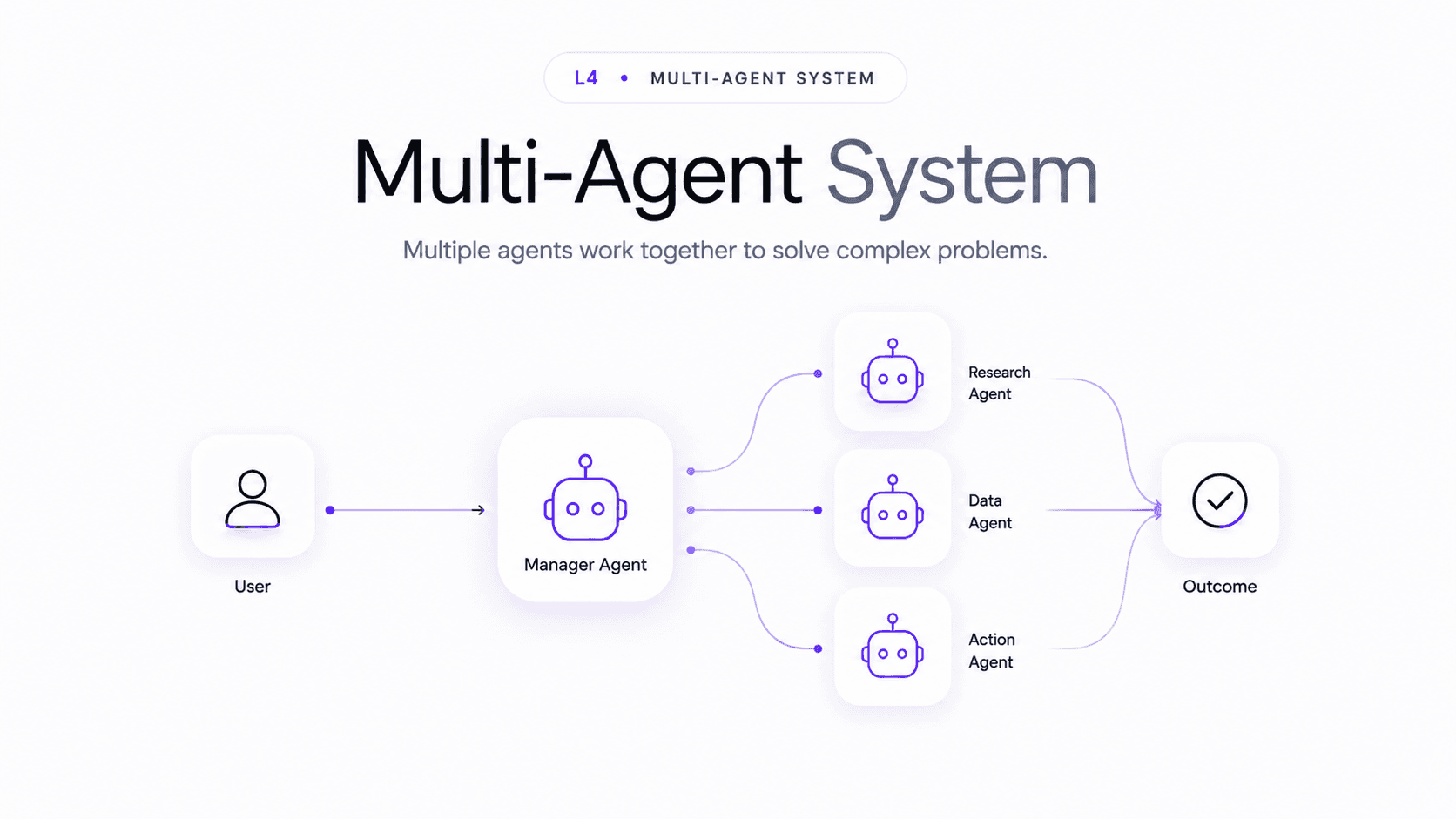
At scale, intelligence stops being centralized. Specialized agents collaborate to solve problems no single agent can efficiently handle.
Once workflows become more complex, a single planning agent starts becoming a bottleneck. It has to reason, execute, validate, and coordinate everything by itself.
Level 4 solves this by distributing responsibilities across multiple specialized agents, each optimized for a specific role.
Instead of one large generalist, you now have a coordinated system of specialists working together under orchestration.
BinaryFlo Example
• Research Agent
• Strategy Agent
• Outreach Agent
• QA Agent
Core Benefits
• Specialization
• Parallel execution
• Scalability
• Better reliability
Key shift: Intelligence becomes collaborative.
This is the frontier — where AI no longer supports business operations but becomes the operating system behind them.
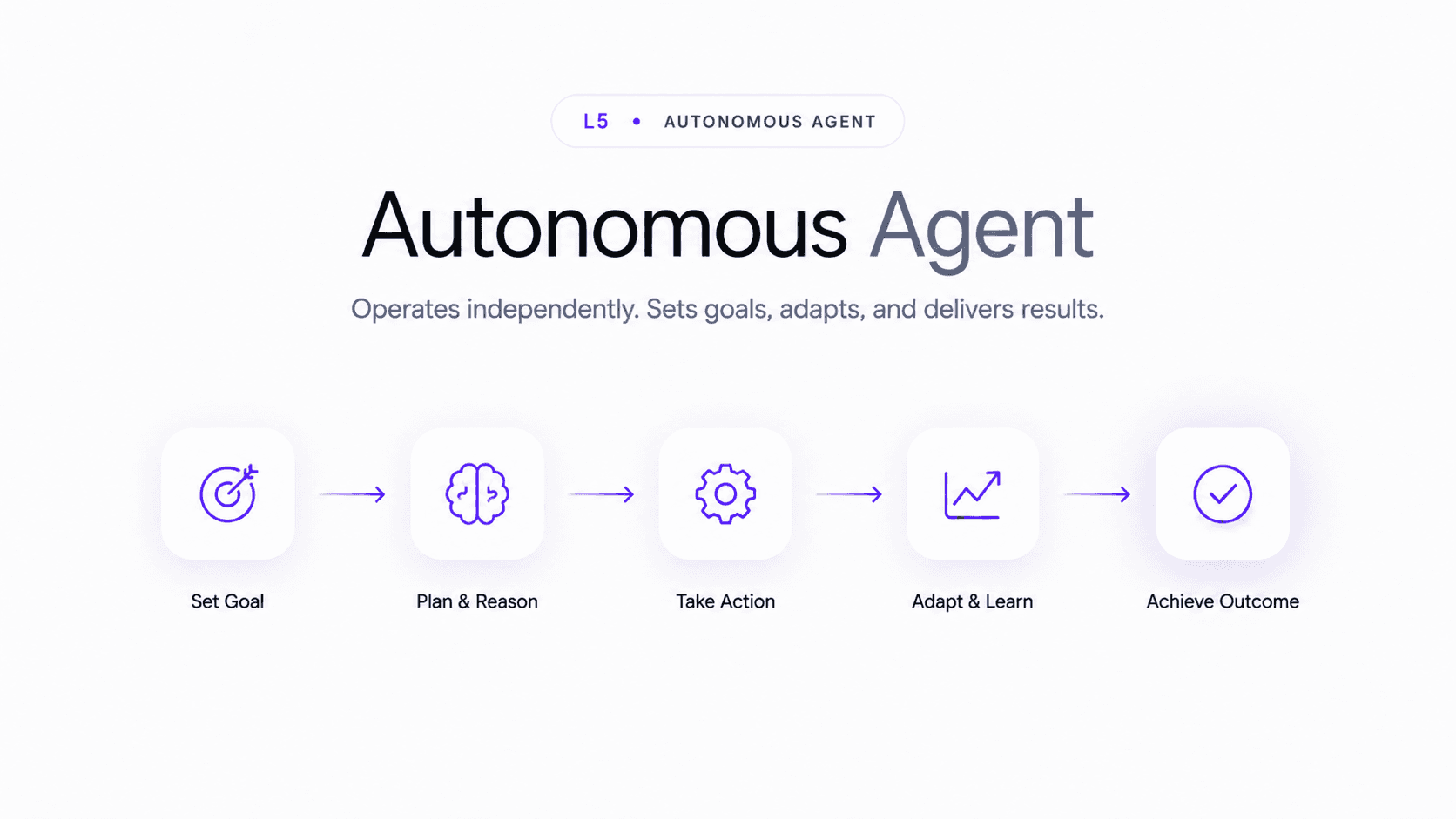
At Level 5, AI evolves beyond individual agents or coordinated teams of agents. Entire business workflows become autonomous, continuously operating with minimal human intervention.
These systems do more than execute predefined tasks. They maintain long-term memory, reason strategically, adapt to new conditions, and optimize themselves over time.
This is the point where AI stops feeling like software and starts behaving like infrastructure.
Example Use Cases
• Autonomous sales pipelines
• Self-operating operations teams
• Self-optimizing business systems
Core Capabilities
• Long-term memory
• Strategic reasoning
• Cross-agent governance
• Self-improvement
Key shift: AI becomes organizational intelligence.
The progression from L1 to L5 is not merely about adding more features — it represents a fundamental shift in autonomy, intelligence, and operational capability.
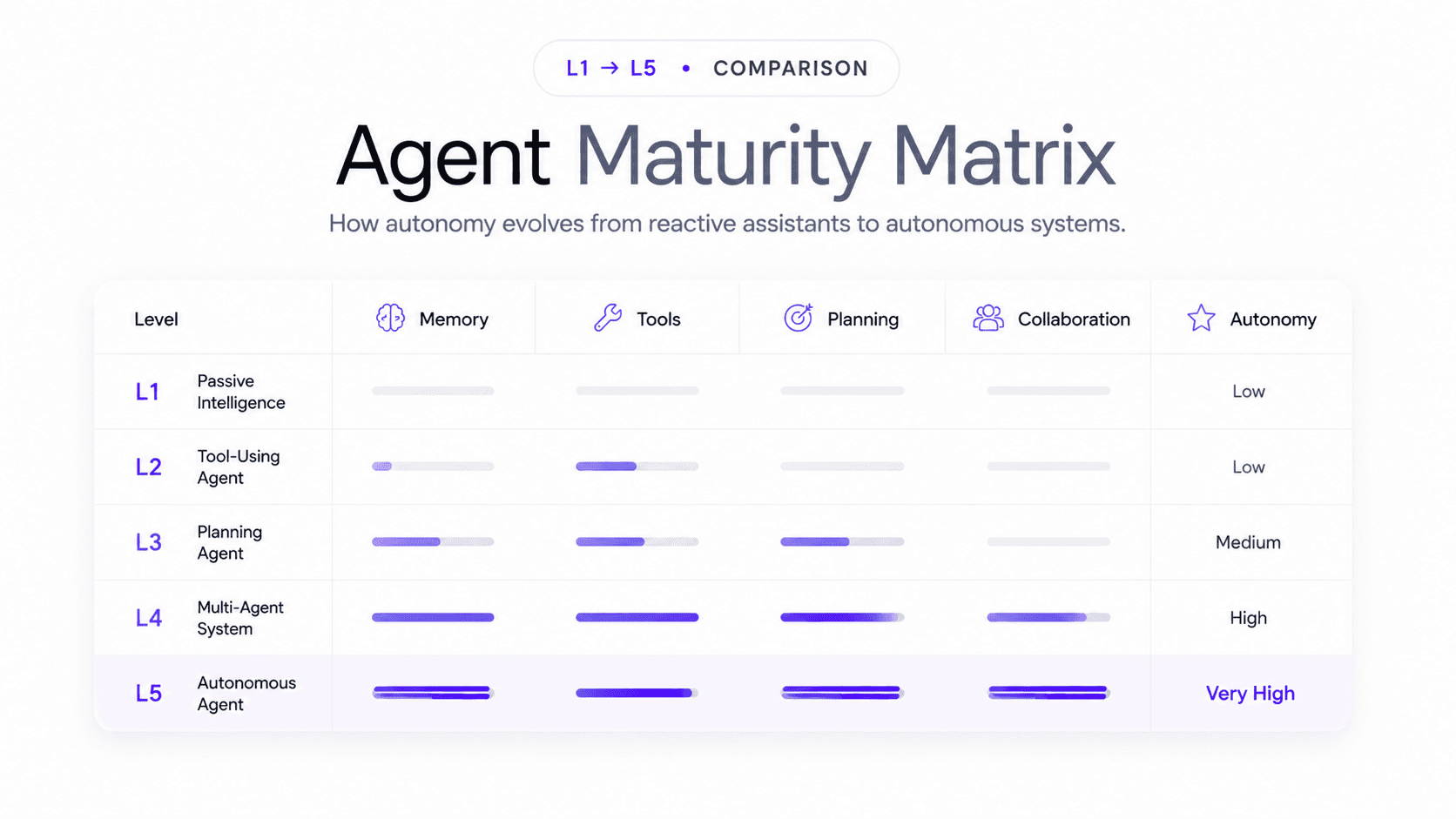
Notice how the biggest jump does not happen between L1 and L2, but between L3 and L4. That transition marks the moment AI shifts from individual intelligence to collaborative intelligence.
Once agents begin coordinating with one another, the system gains the ability to parallelize work, distribute reasoning, and scale decision-making beyond what a single model can manage.
In most real-world systems, the bottleneck is rarely intelligence alone — it is orchestration.